请注意,本文编写于 250 天前,最后修改于 240 天前,其中某些信息可能已经过时。
目录
1. 列表排序
https://docs.pingcode.com/baike/1149749
2. 二分查找的终极答案
import bisect
a = [3,2,1] # 对于一个任意的数组
a.sort() # 先排序
k = 2
insert_index = bisect.bisect_left(range(len(a)),k,key = lambda x:a[x]) # 直接用这个函数进行查找
# insert_index 的结果是1,也就是说大于等于2的值的下标就是1。
对于不同的情况就按照下表来进行改变:
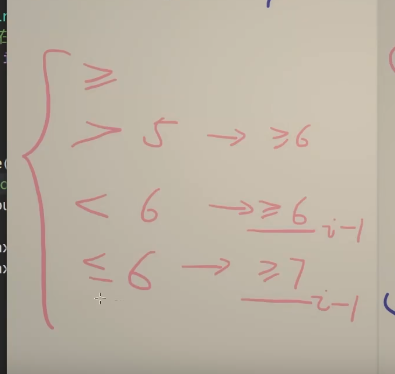
class Solution:
    def maxCapacity(self, costs: List[int], capacity: List[int], budget: int) -> int:
        a = [(cost,cap) for cost,cap in zip(costs,capacity) if cost<budget]
        a.sort(key=lambda x:x[0])
        pre = [0]*(len(a)+1)
        for i,(cost,cap) in enumerate(a):
             pre[i+1] = max(cap,pre[i])
        ans = 0
        for i,(cost,cap) in enumerate(a):
            left = budget-cost
            j = bisect_left(range(i),left,key=lambda j:a[j][0])
            ans = max(ans,cap+pre[j])
        return ans
class Solution:
    def maxCapacity(self, costs: List[int], capacity: List[int], budget: int) -> int:
        a = [(cost,cap) for cost,cap in zip(costs,capacity) if cost<budget]
        a.sort(key=lambda x:x[0])


        s = [(0,0)]
        ans = 0
        for i,(cost,cap) in enumerate(a):
            while s[-1][0]+cost>=budget:
                s.pop()
            ans = max(ans,s[-1][1]+cap)
            if cap>s[-1][1]:
                s.append((cost,cap))
        return ans
本文作者:Deshill
本文链接:
版权声明:本博客所有文章除特别声明外,均采用 BY-NC-SA 许可协议。转载请注明出处!
目录